Cisco Select Certified Partner

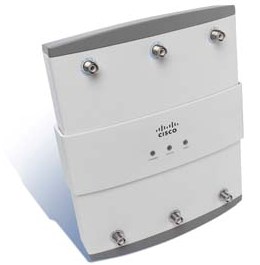
Cisco Aironet 1250 Series Access Point

High Performance Wireless Access Points

Cisco Aironet 1250 Series Access Point

Cisco Access Points
Cisco Aironet 1250 Series Access Point
Cisco Aironet 1252 Wireless Access Point (Auto)
Includes: 802.11a/g/n-d2.0 2.4/5-GHz Mod Auto AP; 6 RP-TNC
#AIR-AP1252AG-A-K9
List Price: $1,299.00
Our Price: $1,000.00
Cisco Aironet 1250 Wireless Access Point (Unified)
Includes: 802.11a/g/n-d2.0 2.4/5-GHz Mod Unified AP; 6 RP-TNC
#AIR-LAP1252AG-A-K9
List Price: $1,299.00
Our Price: $1,000.00
Cisco Aironet 1252G-A Wireless Access Point (Auto)
Includes: 802.11g/n-d2.0 2.4-GHz Mod Auto AP; 3 RP-TNC
#AIR-AP1252G-A-K9
List Price: $1,249.00
Our Price: $962.00
Cisco Aironet 1252G-A Wireless Access Point (Unified)
Includes: 802.11g/n-d2.0 2.4-GHz Mod Unified AP; 3 RP-TNC
#AIR-LAP1252G-A-K9
List Price: $1,249.00
Our Price: $692.00


Cisco Aironet 1250 Series Access Point

The Cisco Aironet® 1250 Series is the first enterprise-class access point to support the IEEE 802.11n draft 2.0 standard. 802.11n offers combined data rates of up to 600 Mbps to provide users with mobile access to high-bandwidth data, voice, and video applications regardless of their location. Through the use of multiple-input multiple-output (MIMO) technology, 802.11n also provides reliable and predictable WLAN coverage to improve the end-user experience for both existing 802.11a/b/g clients and new 802.11n clients.

These access points:

  • Offer combined data rates of up to 600 Mbps to provide users with mobile access to high-bandwidth data, voice, and video applications regardless of their location
  • Use multiple-input multiple-output (MIMO) technology to provide reliable and predictable WLAN coverage
  • Improve user experience for both existing 802.11a/b/g clients and new 802.11n clients

The Aironet 1250 Series is part of the Cisco Unified Wireless Network, a comprehensive solution that unifies the wired and wireless network to:

  • Deliver a common set of services and applications
  • Provide a single experience for any mode of network connectivity
  • Offer simplified operational management

The robust Cisco Aironet® 1250 Series Access Point is a modular platform designed to be easily field-upgradeable to support a variety of wireless capabilities. This modularity allows businesses to deploy existing wireless technologies today with the confidence that their network investment will extend to support emerging and future wireless technologies.

The platform was specifically engineered to support the power, throughput, and mechanical requirements of higher-speed WLAN technologies, including 802.11n. Currently, the platform provides both 2.4-GHz and 5-GHz modules compliant with the IEEE 802.11n draft 2.0 standard. As technology evolves, the platform is flexible to support future radio modules designed to deliver intelligent RF services, further enhancing the performance and reliability of the wireless network. The Cisco Aironet 1250 Series is a rugged indoor access point designed for both office and challenging RF environments such as factories, warehouses, hospitals and large retail establishments that require the antenna versatility associated with connectorized antennas, a rugged metal enclosure, and a broad operating temperature range. With a Gigabit Ethernet (10/100/1000) interface, the Cisco Aironet 1250 Series delivers line-rate throughput for higher-speed WLAN technologies such as 802.11n. The access point offers the flexibility of inline as well as local power options.

The Cisco Aironet 1250 Series is part of the Cisco Unified Wireless Network. The Cisco Unified Wireless Network is a comprehensive solution that unifies the wired and wireless network to deliver a common set of services and applications, providing users a single experience for any mode of network connectivity, and offering IT simplified operational management. The Cisco Aironet 1250 Series integrates seamlessly with the Cisco Unified Wireless Network. It extends the same industry-leading RF and network management capabilities as currently available across the breadth of Cisco wireless solutions.

The Cisco Aironet 1250 Series has two deployment options: controller-based (unified) or standalone (autonomous). Access points using the Lightweight Access Point Protocol (LWAPP) work in conjunction with Cisco wireless LAN controllers and optionally with the Cisco Wireless Control System (WCS). When configured with LWAPP, the Cisco Aironet 1250 Series simplifies operations by automatically detecting the best-available Cisco Wireless LAN Controller and downloading appropriate policies and configuration information with no manual intervention. When deployed as a standalone access point, the Cisco Aironet 1250 Series delivers a baseline set of features and can later be software-upgraded to take advantage of the full benefits of the Cisco Unified Wireless Network.

Investment Protection
The Cisco Aironet 1250 Series is a modular platform that is compliant with the 802.11n draft 2.0 standard and is the first Wi-Fi CERTIFIED 802.11n draft 2.0 access point. Furthermore, the platform has been tested extensively to ensure simple, secure interoperability with IEEE 802.11n draft 2.0 standard devices. The Cisco Aironet 1250 Series provides additional investment protection with its modular, field-upgradeable design and easy-to-install radio modules. Cisco is committed to standards, and the Cisco Aironet 1250 Series provides a path for compliance to the final IEEE 802.11n standard, once ratified. Businesses with an immediate need to enhance the performance of their WLANs can deploy the IEEE 802.11n draft 2.0 standard radio modules now with the confidence that their investments are protected. These modules can be easily field-upgraded should this be required by a shift in standards evolution.

Award-Winning Security
The Cisco Aironet 1250 Series supports industry-standard wireless security protocols, including 802.11i, Wi-Fi Protected Access (WPA), WPA2, and 802.1X, along with numerous Extensible Authentication Protocol (EAP) types. The access point delivers hardware-accelerated Advanced Encryption Standard (AES) encryption designed to meet the most stringent enterprise and government encryption requirements without compromising performance. As part of the Cisco Secure Wireless Solution, Cisco Aironet 1250 Series Access Points operating with LWAPP enable comprehensive wired and wireless intrusion prevention and detection. Each access point can scan the RF environment and report on suspicious or unauthorized wireless activity, effectively allowing businesses to create a comprehensive threat defense across 802.11a/b/g and now 802.11n. Additionally, the Cisco Aironet 1250 Series Access Point supports management frame protection for the encryption of 802.11 management frames by the wireless network infrastructure. This allows the network to completely remove the threat from man-in-the-middle and spoofing attacks. If an access point detects a malicious attack, an alarm will be generated and reported to the network administrator.

RF Management
Cisco incorporates unique capabilities within its wireless solution that address the operational challenges of deploying business wireless networks. At the heart of these capabilities are intelligent Radio Resource Management (RRM) algorithms designed to consistently fine-tune WLAN parameters to best meet ongoing performance requirements. RRM allows the Cisco Unified Wireless Network to continuously analyze the existing RF environment and automatically adjust access point power and channel settings to help mitigate such things as co-channel interference and signal coverage problems. Unlike conventional 802.11a/b/g products, the Cisco Aironet 1250 Series uses multiple-input multiple-output (MIMO) technology to take advantage of the effects of RF multipath propagation in order to improve the reliability and predictability of the wireless signal. The Cisco Aironet 1250 Series supports the latest U.S. and European requirements for Dynamic Frequency Selection (DFS), ensuring the access point accurately detects radar events and makes full use of the available 5-GHz spectrum. In addition, the Cisco Aironet 1250 Series supports a Software Defined Radio (SDR) enabling it to be upgraded in the field to support new frequencies and power levels as they are approved for use. These RF management capabilities increase system capacity, perform automated self-healing to compensate for RF dead zones and access point failures, and provide a comprehensive way to manage one of your most precious assets, your corporate spectrum.

Deployment Scenarios
The Cisco Aironet 1250 Series with support for the 802.11n draft 2.0 standard is ideal for a variety of deployment scenarios across many industries. The improved throughput, reliability, and predictability of an 802.11n network meet the requirements that many companies have for moving towards a truly mobile enterprise. Cisco's next-generation wireless technology is especially beneficial for environments with the following characteristics:

  • Challenging RF environments (for example, manufacturing plants, warehouses, clinical environments)
  • Bandwidth-intensive applications (for example, digital imaging, file transfers, network backup)
  • Real-time, latency-sensitive applications including voice and video
  • Environments that need to support existing 802.11a/b/g and new 802.11n wireless clients

Designed for critical business environments and installations that require antenna versatility, the Cisco Aironet 1250 Series features antenna connectors for improved coverage and aesthetically pleasing installation options. The UL2043 rating of the Cisco Aironet 1250 Series allows the access points to be placed above the ceiling tile in plenum areas regulated by municipal fire codes or suspended from drop ceilings.

Features and Benefits:


Feature Benefit
Data Rates of up to 300 Mbps per Radio, 600 Mbps per Access Point The 802.11n draft 2.0 standard provides capabilities such as 40-MHz channels, packet aggregation, and block acknowledgement which significantly increase the amount of bandwidth available for user applications. With support for physical layer (PHY) data rates up to 300 Mbps per radio, this represents a greater than five-fold increase over the performance of 802.11a/g networks.
Enhanced Reliability and Predictability MIMO technology, with its multiple antennas and advanced signal processing, improves coverage, reduces dead spots, and augments overall client throughput. MIMO also enables higher data rates by transmitting multiple spatial streams across the unique paths formed between devices. Enhanced reliability and throughput provides a better overall end-user experience for users relying on the wireless network for business functions
Powerful Platform Engineered to support the power, thermal dissipation, memory, CPU, and Gigabit Ethernet transmission requirements of 802.11n and future wireless technologies.
Modular Field-Upgradeable Design with Easy-to-Install Modules Investment protection through field-upgradeable radios. As technology evolves, radio modules can be replaced in the field with new radio modules, preserving the investment in the access point chassis and avoiding the expense of installing a new access point.
2.4-GHz and 5-GHz Radio Modules Dual radios allow simultaneous operation of 2.4-GHz and 5-GHz wireless networks, offering the greatest number of available channels and therefore the greatest system capacity and scalability.
Both Inline and Local Powering Options To realize optimal performance, the access point supports both inline power delivered over a single Ethernet cable and local power options.
Extensive Interoperability The Aironet 1250 Series Access Point has undergone extensive interoperability testing to ensure simple, secure interoperability with other 802.11 devices. It is the first Wi-Fi CERTIFIED 802.11n draft 2.0 access point, has earned the Intel Connect with Centrino certification, and has undergone extensive testing in 802.11n plug fests.
Backward Compatibility with Existing 802.11a/b/g Clients Protects existing 802.11a/b/g investments and provides an easy migration to 802.11n.
Integrated RF Management Capabilities Integrated RF management capabilities address the operational challenges of deploying business wireless networks. These capabilities include Radio Resource Management, MIMO, superior DFS support, SDR certification, and spectrum intelligence integration into WCS. Integrated RF management capabilities increase system capacity, improve system performance, perform automated self-healing to compensate for RF dead zones and access point failures, and provide a comprehensive way to manage one of your most precious assets, your corporate spectrum.
Supports up to 24 non-Overlapping Channels1 Provides lower potential interference with neighboring access points, which simplifies deployment and reduces co-channel interference for fewer transmission errors and greater throughput. More channels also means that more of the high- throughput, 40-MHz channels introduced in the 802.11n draft 2.0 standard are supported.
External RP-TNC Antenna Connectors for Both 2.4-GHz and 5-GHz Radios Antenna connectors support a variety of Cisco 2.4-GHz and 5-GHz antennas, providing range and coverage versatility.
Cisco Unified IDS/IPS An integral part of the Cisco Secure Wireless Solution, the industry's first integrated wired and wireless security solution, the access point can monitor the RF environment to detect and locate unauthorized wireless activity, including rogue access points and RF denial of service attacks.
Management Frame Protection Management frame protection encrypts the management header of the 802.11 packet and enables the access point to detect spoofed frames from malicious users impersonating infrastructure access points. If an access point detects a malicious attack, an alert will be generated and reported back to the network administrator.
Rugged Metal Housing The access point is built with a metal case and sturdy features for deployment in rugged environments such as factories, warehouses, and other industrial environments.
UL 2043 Plenum Rating and Extended Operating Temperature Supports installation in environmental air spaces, such as areas above suspended ceilings.
Multipurpose and Lockable Mounting Bracket Provides flexibility during site survey and traditional installation as well as helping to deter theft.

1Supports 3 2.4-GHz and 21 5-GHz channels in the FCC regulatory domain; channel support varies by country. See Table 2 for frequency band and operating channel support in your particular regulatory domain.

Technical Specifications:


Cisco Aironet 1250 Series Access Points Specification
Software
  • Cisco IOS Software Release 12.4(10b)JA or later (Autonomous Mode).
  • Cisco IOS Software Release 12.4(10b)JX or later (Unified Mode).
  • Cisco Unified Wireless Network Software Release 4.2 or later.
Draft 802.11n Version 2.0 (and Related) Capabilities
  • 2x3 MIMO with two spatial streams
  • Maximal Ratio Combining (MRC)
  • Legacy beamforming (hardware supports this capability; not yet enabled in software)
  • 20-and 40-MHz channels
  • PHY data rates up to 300 Mbps
  • Packet aggregation: A-MPDU (Tx/Rx), A-MSDU (Tx/Rx)
  • 802.11 DFS (Bin 5)
  • Cyclic Shift Diversity (CSD) support
Data Rates Supported 802.11a: 6, 9, 12, 18, 24, 36, 48, and 54 Mbps
802.11g: 1, 2, 5.5, 6, 9, 11, 12, 18, 24, 36, 48, and 54 Mbps
802.11n data rates (2.4 GHz and 5 GHz):
MCS Index1 GI2 = 800ns GI = 400ns
20-MHz Rate (Mbps) 40-MHz Rate (Mbps) 20-MHz Rate (Mbps) 40-MHz Rate (Mbps)
0 6.5 13.5 7.2 15
1 13 27 14.4 30
2 19.5 40.5 21.7 45
3 26 54 28.9 60
4 39 81 43.3 90
5 52 108 57.8 120
6 58.5 121.5 65 135
7 65 135 72.2 157.5
8 13 27 14.4 30
9 26 54 28.9 60
10 39 81 43.3 90
11 52 108 57.8 120
12 78 162 86.7 180
13 104 216 115.6 240
14 117 243 130 270
15 130 270 144.4 300
Frequency Band and 20-MHz Operating Channels A (Americas (FCC)):
  • 2.412 to 2.462 GHz; 11 channels
  • 5.180 to 5.320 GHz; 8 channels
  • 5.500 to 5.700 GHz, 8 channels (excludes 5.600 to 5.640 GHz)
  • 5.745 to 5.825 GHz; 5 channels

C (China):

  • 2.412 to 2.472 GHz; 13 channels
  • 5.745 to 5.825 GHz; 5 channels

E (ETSI):

  • 2.412 to 2.472 GHz; 13 channels
  • 5.180 to 5.320 GHz; 8 channels
  • 5.500 to 5.700 GHz, 11 channels

I (Israel):

  • 2.412 to 2.472 GHz, 13 channels
  • 5.180 to 5.320 GHz; 8 channels

K (Korea):

  • 2.412 to 2.472 GHz; 13 channels
  • 5.180 to 5.320 GHz; 8 channels
  • 5.500 to 5.620 GHz, 7 channels
  • 5.745 to 5.805 GHz, 4 channels
N (Non-FCC):
  • 2.412 to 2.462 GHz; 11 channels
  • 5.180 to 5.320 GHz; 8 channels
  • 5.745 to 5.825 GHz; 5 channels

P (Japan2):

  • 2.412 to 2.472 GHz; 13 channels
  • 5.180 to 5.320 GHz; 8 channels

S (Singapore):

  • 2.412 to 2.472 GHz; 13 channels
  • 5.180 to 5.320 GHz; 8 channels
  • 5.745 to 5.825 GHz; 5 channels

T (Taiwan):

  • 2.412 to 2.462 GHz; 11 channels
  • 5.280 to 5.320 GHz; 3 channels
  • 5.500 to 5.700 GHz, 11 channels
  • 5.745 to 5.825 GHz; 5 channels
Note: This varies by regulatory domain. Refer to the product documentation for specific details for each regulatory domain.
Maximum Number of Non-Overlapping Channels 2.4 GHz

802.11b/g:

  • 20 MHz: 3

802.11n:

  • 20 MHz: 3
  • 40 MHz: 1
5 GHz

802.11a:

  • 20 MHz: 21

802.11n:

  • 20 MHz: 21
  • 40 MHz: 9
Note: This varies by regulatory domain-refer to the product documentation for specific details for each regulatory domain.
Receive Sensitivity 802.11a

-86 dBm @ 6 Mb/s
-85 dBm @ 9 Mb/s
-82 dBm @ 12 Mb/s
-81 dBm @ 18 Mb/s
-80 dBm @ 24 Mb/s
-79 dBm @ 36 Mb/s
-74 dBm @ 48 Mb/s
-73 dBm @ 54 Mb/s

802.11b

-90 dBm @ 1 Mb/s
-89 dBm @ 2 Mb/s
-87 dBm @ 5.5 Mb/s
-85 dBm @ 11 Mb/s

802.11g

-87 dBm @ 6 Mb/s
-86 dBm @ 9 Mb/s
-83 dBm @ 12 Mb/s
-82 dBm @ 18 Mb/s
-81 dBm @ 24 Mb/s
-80 dBm @ 36 Mb/s
-75 dBm @ 48 Mb/s
-74 dBm @ 54 Mb/s

5-GHz 802.11n (HT20)

-85 dBm @ MC0
-84 dBm @ MC1
-83 dBm @ MC2
-82 dBm @ MC3
-79 dBm @ MC4
-74 dBm @ MC5
-73 dBm @ MC6
-72 dBm @ MC7
-85 dBm @ MC8
-84 dBm @ MC9
-83 dBm @ MC10
-82 dBm @ MC11
-79 dBm @ MC12
-74 dBm @ MC13
-73 dBm @ MC14
-72 dBm @ MC15

5-GHz 802.11n (HT40)

-85 dBm @ MC0
-84 dBm @ MC1
-83 dBm @ MC2
-79 dBm @ MC3
-76 dBm @ MC4
-71 dBm @ MC5
-70 dBm @ MC6
-69 dBm @ MC7
-85 dBm @ MC8
-84 dBm @ MC9
-83 dBm @ MC10
-79 dBm @ MC11
-76 dBm @ MC12
-71 dBm @ MC13
-70 dBm @ MC14
-69 dBm @ MC15

2.4-GHz 802.11n (HT20)

-86 dBm @ MC0
-85 dBm @ MC1
-84 dBm @ MC2
-83 dBm @ MC3
-80 dBm @ MC4
-75 dBm @ MC5
-74 dBm @ MC6
-73 dBm @ MC7
-86 dBm @ MC8
-85 dBm @ MC9
-84 dBm @ MC10
-83 dBm @ MC11
-80 dBm @ MC12
-75 dBm @ MC13
-74 dBm @ MC14
-73 dBm @ MC15

2.4-GHz 802.11n (HT40)

-86 dBm @ MC0
-85 dBm @ MC1
-84 dBm @ MC2
-80 dBm @ MC3
-77 dBm @ MC4
-72 dBm @ MC5
-71 dBm @ MC6
-70 dBm @ MC7
-86 dBm @ MC8
-85 dBm @ MC9
-84 dBm @ MC10
-80 dBm @ MC11
-77 dBm @ MC12
-72 dBm @ MC13
-71 dBm @ MC14
-70 dBm @ MC15

Maximum Transmit Power 2.4GHz

802.11b

  • 23 dBm with 1 antenna

802.11g

  • 20 dBm with 1 antenna

802.11n (HT20)

  • 17 dBm with 1 antenna
  • 20 dBm with 2 antennas

802.11n (HT40)

  • 17 dBm with 1 antenna
  • 20 dBm with 2 antennas
5GHz

802.11a

  • 17 dBm with 1 antenna

802.11n non-HT duplicate (802.11a duplicate) mode

  • 17 dBm with 1 antenna

802.11n (HT20)

  • 17 dBm with 1 antenna
  • 20 dBm with 2 antennas

802.11n (HT40)

  • 17 dBm with 1 antenna
  • 20 dBm with 2 antennas
Note: The maximum power setting will vary by channel and according to individual country regulations. Refer to the product documentation for specific details.
Available Transmit Power Settings 2.4GHz
  • 23 dBm (200 mW)
  • 20 dBm (100 mW)
  • 17 dBm (50 mW)
  • 14 dBm (25 mW)
  • 11 dBm (12.5 mW)
  • 8 dBm (6.25 mW)
  • 5 dBm (3.13 mW)
  • 2 dBm (1.56 mW)
  • -1 dBm (0.78 mW)
5GHz
  • 20 dBm (100 mW)
  • 17 dBm (50 mW)
  • 14 dBm (25 mW)
  • 11 dBm (12.5 mW)
  • 8 dBm (6.25 mW)
  • 5 dBm (3.13 mW)
  • 2 dBm (1.56 mW)
  • -1 dBm (0.78 mW)
Note: The maximum power setting will vary by channel and according to individual country regulations. Refer to the product documentation for specific details.
Antenna Connectors
  • 2.4-GHz: 3 RP-TNC connectors
  • 5-GHz: 3 RP-TNC connectors
Interfaces
  • 10/100/1000BASE-T autosensing (RJ-45)
  • Management console port (RJ45)
Indicators
  • Status LED indicates operating state, association status, error/warning condition, boot sequence, and maintenance status.
  • Ethernet LED indicates activity over the Ethernet, status.
  • Radio LED indicates activity over the radio, status.
Modularity
  • Number of radio module slots: 2
  • Available radio modules
Part Number Description Maximum per AP1250 platform
AIR-RM1252A-A-K9 2.4 802.11a/n-d2.0 5-GHz Radio Module; 3 RP-TNC 1
AIR-RM1252G-A-K9 802.11g/n-d2.0 2.4-GHz Radio Module; 3 RP-TNC 1
Dimensions (W x L x H)
  • AP (without mounting bracket): 8.12 x 9.52 x 2.35 in. (20.62 x 24.18 x 5.97 cm)
  • AP (with mounting bracket): 8.12 x 9.52 x 2.75 in. (20.62 x 24.18 x 6.99 cm)
Weight
  • AP with 2 radios installed: 5.1 lbs (2.31 kg)
  • AP chassis: 2.1 lbs (0.95 kg)
  • 2.4 GHz radio: 1.5 lbs (0.68 kg)
  • 5 GHz radio: 1.5 lbs (0.68 kg)
Environmental Non-operating (storage) temperature: -40 to 185°F (-40 to 85°C)
Operating temperature: -4 to +131°F (-20 to +55°C)
Operating humidity: 10 to 90 percent (non-condensing)
System Memory
  • 64 MB DRAM
  • 32 MB flash
Input Power Requirement
  • AP1250: 36 to 57 VDC
  • Power Supply and Power Injector: 100 to 240 VAC; 50 to 60 Hz
Powering Options
  • Cisco Catalyst switch port capable of sourcing 18.5W or greater
  • Cisco AP1250 Power Injector (AIR-PWRINJ4)
  • Cisco AP1250 Local Power Supply (AIR-PWR-SPLY1)
  • 802.3af switch (AP1250 with single radio only)
Power Draw
  • AP1250 with two RM1252 radio modules installed: 16.9 W
  • AP1250 with one RM1252 radio module installed: 12.95 W

Note: For an AP1250 with two radios, 16.9 W is the maximum power required at the access point (powered device). When deployed using PoE, the power drawn from the power sourcing equipment will be higher by some amount dependent on the length of the interconnecting cable. This additional power may be as high as 1.6W, bringing the total system power draw (access point + cabling) to 18.5 W. A similar consideration applies for an AP1250 with one radio.

Warranty 90 days
Compliance Standards
  • Safety:
  • UL 60950-1
  • CAN/CSA-C22.2 No. 60950-1
  • UL 2043
  • IEC 60950-1
  • EN 60950-1
  • Radio approvals:
  • FCC Part 15.247, 15.407
  • RSS-210 (Canada)
  • EN 300.328, EN 301.893 (Europe)
  • ARIB-STD 33 (Japan)
  • ARIB-STD 66 (Japan)
  • ARIB-STD T71 (Japan)
  • AS/NZS 4268.2003 (Australia and New Zealand)
  • EMI and susceptibility (Class B)
  • FCC Part 15.107 and 15.109
  • ICES-003 (Canada)
  • VCCI (Japan)
  • EN 301.489-1 and -17 (Europe)
  • EN 60601-1-2 EMC requirements for the Medical Directive 93/42/EEC
  • Security:
  • 802.11i, WPA2, WPA
  • 802.1X
  • AES, TKIP
  • Other:
  • FCC Bulletin OET-65C
  • RSS-102
Wireless Network Standards and WiFi Certification wifi certified

IEEE Standard

  • IEEE 802.11a
  • IEEE 802.11b
  • IEEE 802.11g
  • IEEE 802.11n draft 2.0
  • IEEE 802.11h
  • IEEE 802.11d

Security:

  • WPA™: Enterprise, Personal
  • WPA2™: Enterprise, Personal

EAP Type(s):

  • EAP-Transport Layer Security (TLS)
  • EAP-Tunneled TLS(TTLS)/Microsoft Challenge Handshake Authentication Protocol Version 2 (MSCHAPv2)
  • Protected EAP (PEAP)v0/EAP-MSCHAPv2
  • PEAPv1/EAP-Generic Token Card (GTC)
  • EAP-SIM

Multimedia:

  • WMM™
1 MCS Index: The Modulation and Coding Scheme (MCS) index determines the number of spatial streams, the modulation, the coding rate, and data rate values.
2 GI: A Guard Interval (GI) between symbols helps receivers overcome the effects of multipath delays.

Power Options:

The Cisco Aironet 1250 Series Access Point may be powered by a Cisco Ethernet switch, a power injector, or a local power supply.

Cisco Ethernet Switch

The number of radio modules determines which Cisco Ethernet switch can power the Aironet 1250 Series access point. There are two scenarios:

Aironet 1250 Series Access Point with one RM1252 radio module installed
The Aironet 1250 Series Access Point with one RM1252 radio module installed requires 12.95W, which is within the 802.3af Power over Ethernet standard. Any Cisco switch supporting 802.3af may be used to power the Aironet 1250 Series Access Point with one RM1252 radio module installed.

Aironet 1250 Series Access Point with two RM1252 radio modules installed
Beginning late 2007, Cisco will enable auto-negotiating, single-port power for the Aironet 1250 Access Point on leading switches across the Catalyst portfolio. This unique, integrated solution provides the full power requirements for dual radio modules and eliminates the need to run an additional cabling drop or insert a separate power injector.

Power Injector

Aironet Power injector

The power injector for Cisco Aironet 1250 Series Access Points (AIR-PWRINJ4) contains an integrated power supply that converts 100 to 240 volts AC into 56 volts DC and then injects this power onto the Category 5 Ethernet cable to power the access point.

Power injector diagram

Figure 2. Cisco Aironet Power Injector: Providing Inline Power to Cisco Aironet Access Points

As shown in Table 3, a Cisco Aironet Power Injector can be configured to order or can be ordered as a separate item. If the power injector is configured with the access point order, it will ship inside the packaging box of the access point. If the power injector is ordered as a spare, it will ship in a separate box.

Power Injector Product Specifications

Table shows the product specifications for the Cisco Aironet Power Injector for the Aironet 1250 Series Access Point.

Cisco Aironet Power Injector for the Cisco Aironet 1250 Series
Part Number AIR-PWRINJ4
LAN Connection
  • Max Category 5 cable length: 100m from switch to device
  • Type: RJ-45
  • Label: 10/100/1000 BASE-TX To SWITCH
Device Connection
  • Max Cat 5 cable length: 100m from switch to device
  • Type: RJ-45
  • Label: 10/100/1000BASE-TX To AP
LEDs AC Power Status, Access Point Power Status and Fault
Electrical
  • Integrated power supply
  • Input voltage: 100-240 VAC, 50/60 Hz
  • Input current: 0.95A
  • Output voltage: 56 VDC
  • Output current: 0.550A
Dimensions 6.54 x 3.15 x 1.73 in. (16.6 x 8 x 4.4 cm)
Weight 13.8 oz (390 grams)
Environmental
  • Non-operating temperature: -40 to +176°F (-40 to +85°C)
  • Operating temperature: -4 to +131°F (-20 to +55°C)
Compliance Standards
  • Safety:
  • UL 60950-1
  • CAN/CSA-C22.2 No. 60950-1
  • IEC 60950-1
  • EN 60950-1


Power Supply

The Cisco Aironet 1250 Power Supply is a 100- to 240-VAC power supply that provides 56 VDC to locally power the access point.

Cisco Aironet Wireless Access Points Solution:

As WLAN deployments expand, security, scalability, reliability, ease of deployment, and management become increasingly important. Cisco provides a comprehensive line of access points that deliver enterprise-class features for business-ready wireless LANs.

Access Point products

Executive Summary

Access points are critical elements of the Cisco Unified Wireless Network. Cisco single- and dual-band access points are designed for offices and similar environments, challenging RF environments, and the outdoors. The devices are available in two versions: unified or autonomous. Unified access points operate with the Lightweight Access Point Protocol (LWAPP) and work in conjunction with Cisco wireless LAN controllers and the Wireless Control System (WCS. Autonomous access points are based on Cisco IOS® Software and may optionally operate with the CiscoWorks Wireless LAN Solution Engine (WLSE). Autonomous access points, along with the WLSE, deliver a core set of features and may be field-upgraded to take advantage of the full benefits of the Cisco Unified Wireless Network as requirements evolve.

To make the best choices for their particular applications, customers need to understand the features and benefits of the different Cisco Aironet® access points. This solution overview details the capabilities of each of the devices in the Cisco Aironet Family of wireless access points

Management Paradigm

As wireless LANs become increasingly mission-critical and evolve in terms of scale and capabilities, the way the wireless deployment is managed must evolve as well. Because each customer and each deployment is unique, Cisco provides differing feature sets and differing management paradigms to address these customer-specific requirements

Cisco provides a core feature set that includes autonomous access points and the CiscoWorks WLSE management appliance. The core feature set provides a base set of capabilities that are required for enterprise deployments. Core features include secure connectivity through support for 802.11i Wi-Fi Protected Access 2 (WPA2), fast and secure Layer 2 roaming, and interfaces to a variety of third-party applications and products. Most Cisco access points are available in versions designed for autonomous operation. These devices may be upgraded in the field to lightweight mode, thereby providing customers with a smooth path from core to unified features.

The Cisco unified feature set is delivered by lightweight access points, wireless LAN controllers, and the Wireless Control System (WCS) management solution. The unified feature set represents the most comprehensive set of capabilities in the industry, including guest access, wireless intrusion detection and intrusion prevention, scalable Layer 3 mobility, and location services. Most Cisco Aironet access points are available in versions designed for lightweight operation.

Deployment Environments

Wireless LANs are becoming commonplace in numerous environments, including offices, schools, factories, warehouses, and even the outdoors. At the same time, the wireless industry is evolving from lower-capacity, single-band devices to high-capacity, dual-band solutions. The Cisco Aironet Family of access points meets these various application requirements by providing:

  • Single- and dual-band access points
  • Devices designed for indoor and outdoor deployments
  • A consistent hardware feature set and predictable RF performance for deployment across the enterprise

As WLAN deployment expands into more applications and installation scenarios, a diverse line of access points is required to meet the associated capacity, coverage, and environmental requirements. The Cisco product line includes access points designed for offices and similar facilities, such as hospitals and retail environments, challenging RF environments like factories and warehouses, and the outdoors. These devices can be installed on desktops, on walls, on ceilings, above ceilings, and on top of poles.

While application requirements may vary, Cisco understands that all enterprise customers require uncompromised network security, scalable manageability, and an evolving set of network services. That's why all Cisco Aironet access points support the Cisco Unified Wireless Network, a framework for wired and wireless integration that delivers the security, manageability, and services that enterprises have come to expect from Cisco on both wired and wireless networks.

Solution

Addressing Feature Requirements
As wireless LAN usage has evolved from basic transport for largely transactional applications, so have the feature expectations of wireless LAN users and administrators. This change has come about on a segment-by-segment, customer-by-customer basis. It is critical for Cisco to provide differing feature sets to best fit differing customer requirements. Given that customer requirements can evolve during the lifetime of a wireless LAN deployment, it is also necessary to provide a means of smoothly upgrading this feature set for the installed base of products, with minimal disruption to network operations.

Cisco's unified wireless LAN feature set offers the features required for most enterprise deployments. Some deployments may not yet require these advanced capabilities. To address these evolving requirements, customers can select lightweight access points, or they can upgrade autonomous access points in the field to lightweight operation. With Cisco, customers can choose the feature set that is right for them, at the time that it is right for them. Table 1 provides a summary of the operational capabilities of various Cisco Aironet access points.

Operational Capabilities of Cisco Aironet Access Points
Cisco Series Autonomous Operation Lightweight Operation
1100 Series Yes Yes
1130AG Series Yes Yes
1200 Series Yes Yes
1230AG Series Yes Yes
1240AG Series Yes Yes
1250 Series Yes Yes
1300 Series Yes Yes
1500 Series No Yes

Addressing Capacity Requirements
In just a few years, WLANs have evolved from proprietary systems with sub-Mbps capabilities to standardized offerings operating at data rates as high as 600 Mbps for dual-band 802.11n access points. These high data rates are available by taking advantage of the emerging 802.11n draft 2.0 standard with radios operating in both the 2.4 GHz band and the 5 GHz band. 802.11n draft 2.0 offers backward compatibility with 802.11a/b/g devices. Both 802.11b/g and 802.11n draft 2.0 are limited to three nonoverlapping channels when deployed in the 2.4 GHz band. 802.11a and 802.11n draft 2.0 support as many as 23 channels in the 5 GHz band (depending upon local regulations). To provide both backward compatibility and high capacity, WLAN client vendors are migrating to 802.11n-capable client devices, although many devices will continue to support the 802.11a/b/g standards and the 802.11n support complete backwards compatibility to ensure investment protection.

Deploying an infrastructure that takes full advantage of next generation wireless with 802.11n makes sense if capacity or reliability is currently an issue or is expected to become an issue during the useful life of the infrastructure devices. Given the rapid expansion of wireless-enabled devices, increasing capacity requirements are likely to apply to most WLAN installations. For this majority of applications, access points that support the emerging 802.11n draft 2.0 standard represents a better long-term value, particularly given the low price premium relative to performance. For the few applications that are not expected to present capacity issues in the near term, customers can choose existing 802.11a/g dual-radio access points.

Cisco Aironet Access Point Support for 802.11a/b/g and 802.11n draft 2.0
Cisco Series 802.11b 802.11g 802.11a 802.11n Draft 2.0
1100 Series Yes Yes No No
1130AG Series Yes Yes Yes No
1200 Series Yes Yes Optional1 No
1230AG Series Yes Yes Yes No
1240AG Series Yes Yes Yes No
1250 Series Yes Yes Yes Yes
1300 Series Yes Yes No No
1500 Series Yes Yes Yes No

1 With a hardware upgrade module, Cisco Aironet 1200 Series Access Points may be field-upgraded to support 802.11a.

Award-Winning Security

The Cisco Aironet Series access points supports 802.11i, Wi-Fi Protected Access (WPA), WPA2, and numerous Extensible Authentication Protocol (EAP) types. WPA and WPA2 are the Wi-Fi Alliance certifications for interoperable, standards-based WLAN security. These certifications support IEEE 802.1X for user-based authentication, Temporal Key Integrity Protocol (TKIP) for WPA encryption, and Advanced Encryption Standard (AES) for WPA2 encryption. These certifications help to ensure interoperability between Wi-Fi-certified WLAN devices from different manufacturers.

Cisco Aironet Series Access Points operating with LWAPP support Cisco Unified Intrusion Detection System/Intrusion Prevention System (IDS/IPS), a software feature that is part of the Cisco Self-Defending Network and is the industry's first integrated wired and wireless security solution. Cisco Unified IDS/IPS takes a comprehensive approach to security-at the wireless edge, wired edge, WAN edge, and through the data center. When an associated client sends malicious traffic through the Cisco Unified Wireless Network, a Cisco wired IDS device detects the attack and sends shun requests to Cisco wireless LAN controllers, which will then disassociate the client device.

Unified IDS IPS diagram

Figure 1. Cisco Unified IDS/IPS Detects Malicious Attacks Allowing
the WLAN Controller to Disassociate the Offending Client Device

Autonomous or unified Cisco Aironet Series access points support management frame protection for the authentication of 802.11 management frames by the wireless network infrastructure. This allows the network to detect spoofed frames from access points or malicious users impersonating infrastructure access points. If an access point detects a malicious attack, an incident will be generated by the access point and reports will be gathered on the Cisco wireless LAN controller, Cisco WCS, or CiscoWorks WLSE.

Management and Deployment Flexibility

The Cisco Aironet Series access points are key elements of the Cisco Unified Wireless Network, a comprehensive solution that delivers an integrated, end-to-end wired and wireless network. Using the radio and network management features of the Cisco Unified Wireless Network for simplified deployment, the access points extend the security, scalability, reliability, ease of deployment, and manageability available in wired networks to the wireless LAN. In addition to management flexibility the Cisco Aironet Series offers investment protection deployment flexibility with Hybrid REAP and Link Role Flexibility.

Hybrid REAP
Hybrid Remote Edge Access Point (Figure 2) functionality is supported on the Cisco Aironet 1240AG and 1130AG Series Access Points. It allows users to deploy access points in remote offices, and choose whether they would like to have traffic bridged locally, or tunneled over the WAN over LWAPP on a per SSID basis. If users choose to bridge traffic locally, then it is bridged onto separate VLANs that directly correlate to an SSID (i.e. there is a 1:1 mapping of SSIDs to VLANs when traffic is bridged locally).

Remote Edge AP diagram

Figure 2. Remote Edge Access Point (REAP) Capabilities Allow Users to
Deploy Access Points in Remote Offices, and Choose Whether
They Would Like to Have Traffic Bridged Locally, or Tunneled
over the WAN over LWAPP on a Per-SSID Basis

Users receive their IP address locally within the branch, but authenticate at a central site when using 802.1x, 802.11i, MAC authentication, web authentication, or NAC is in use. If any type of pre-shared key is used (i.e. WEP, WPA-PSK), then there is no need for central authentication. After central authentication, the user traffic can still be bridged locally.

If a WAN link goes down, no new users using authentication can be added into the network, however users that have already authenticated remain connected. Users using pre-shared key remain connected and new pre-shared key users can still associate with the network since centralized authentication is not necessary. When the WAN link becomes active again, all users are disassociated and then authenticated to the network. This is used to ensure that the controller has accurate, up to date information about the users who are on the network.

Following are key elements of Hybrid REAP functionality:

  • Supported only on Cisco Aironet 1240AG and 1130AG Series Access Points.
  • 8 advertised WLANs/SSIDs that terminate on a Controller or bridged locally.
  • Locally bridged WLAN/SSID can be mapped to a VLAN.
  • There is support for NAC/Web Auth/802.1x/802.11i on a per WLAN/SSID basis. These protocols are handled centrally, and subsequently the traffic can be bridged locally or continue to be tunneled back to the controller.
  • If an AP has never joined a Controller, it can be primed with an IP address, subnet mask, default gateway, and IP address of a Controller. After the AP has contacted the Controller the console is no longer available.
  • Cisco recommends that only two Hybrid REAPs be used in any one location over a WAN connection. This configuration is recommended because of the WAN bandwidth required.

Link Role Flexibility
The autonomous versions of the Cisco Aironet 1300 Series, 1240AG Series, 1230AG Series, and the 1200 Series offer link role flexibility, which provides both access point and bridge functions through configuration of each radio as an access point, repeater, root bridge, non-root bridge, or workgroup bridge. This configuration flexibility enables the access points to address a wide range of applications, including basic wireless LAN coverage, wireless LAN coverage with wireless backhaul, and more traditional bridging applications.

Wireless LAN Link Role Flexibility Applications for Dual-Band Access Points
Radio 1(802.11g or 802.11a) Radio 2 (802.11g or 802.11a) RJ-45 State
Root Bridge (RB) Root bridge, non-root bridge, access point, or workgroup bridge Uplink
Non-root Bridge (NRB) Root bridge, non-root bridge, access point, or workgroup bridge Uplink
Workgroup Bridge (WGB) Root bridge, non-root bridge, or access point Uplink
Access Point (AP) Root bridge, non-root bridge, access point, or workgroup bridge Uplink
Repeater Root bridge, non-root bridge, or access point Downlink

Note: Only one 802.11g radio and one 802.11a radio are supported.

Office Access Points

Cisco Aironet 1130AG Series IEEE 802.11a/b/g Access Point
Packages high-capacity, high-security, and enterprise-class features to deliver wireless LAN access for a low total cost of ownership. The device is available in either a lightweight version or an autonomous version that may be field-upgraded to lightweight operation. With support for both lightweight and autonomous operation, customers can enjoy the simplicity and efficiency of a common hardware platform even while having a hybrid lightweight and autonomous deployment. Designed for wireless LAN coverage in offices and similar RF environments, this unobtrusive access point features integrated antennas and dual IEEE 802.11a/g radios for robust and predictable coverage, delivering a combined capacity of 108 Mbps. The product comes complete with all necessary mounting hardware to provide for an installation that is both secure and consistent with contemporary office décor. The mounting bracket locks the access point as well as the Ethernet and console cables in place to prevent theft and tampering. The Cisco Aironet 1130AG Series is ready to install and easy to manage, reducing the cost of deployment and ongoing maintenance.

Cisco Aironet 1100 Series Access Point
Offers customers an affordable, easy-to-install, 802.11g single-band access point that features enterprise-class management, security, and scalability. The device is available in either a lightweight version or an autonomous version that may be field-upgraded to lightweight operation.

Indoor Access Points for Challenging RF Environments

Cisco Aironet 1250 Series IEEE 802.11n draft 2.0 Access Point
The Cisco Aironet® 1250 Series is the first enterprise-class access point to support the IEEE 802.11n draft 2.0 standard. 802.11n offers combined data rates of up to 600 Mbps to provide users with mobile access to high-bandwidth data, voice, and video applications regardless of their location. Through the use of multiple-input multiple-output (MIMO) technology, 802.11n also provides reliable and predictable WLAN coverage to improve the end-user experience for both existing 802.11a/b/g clients and new 802.11n clients. The robust Cisco Aironet® 1250 Series Access Point is a modular platform designed to be easily field-upgradeable to support a variety of wireless capabilities. This modularity allows businesses to deploy existing wireless technologies today with the confidence that their network investment will extend to support emerging and future wireless technologies.

Cisco Aironet 1240AG Series IEEE 802.11a/b/g Access Point
Delivers the versatility, high capacity, security, and enterprise-class features required in more challenging RF environments, such as warehouses, factories, and retailers. The device is available in either a lightweight or an autonomous version that may be field-upgraded to lightweight operation. With support for both lightweight and autonomous operation, customers can enjoy the simplicity and efficiency of having a common hardware platform even while having a hybrid lightweight and autonomous deployment. Designed for wireless LANs in rugged environments or installations that require specialized external antennas, the Cisco Aironet 1240AG Series features diversity antenna connectors for both 2.4 and 5 GHz bands to provide extended range, coverage versatility, and more flexible installation options. The Cisco Aironet 1240AG Series Access points combines this versatility with industry-leading transmit power, receive sensitivity, and delay spread for high-multipath environments, providing reliable performance and throughput under the most demanding conditions. A second-generation dual-band access point, the Cisco Aironet 1240AG Series supports IEEE 802.3af Power over Ethernet (PoE). The product comes complete with all necessary mounting hardware to provide for an installation that is both secure and rugged. The mounting bracket locks the access point as well as the Ethernet and console cables in place to prevent theft and tampering.

Cisco Aironet 1200 Series Access Point
Offers the same versatility, high capacity, security, and enterprise-class features demanded by industrial wireless LAN customers in a single-band 802.11g solution. The modular device provides the flexibility to field-upgrade to a dual-band 802.11a/g network by adding a CardBus-based 802.11a upgrade module that can be easily installed in Cisco Aironet 1200 Series access points that were originally configured for 802.11g.

Cisco Aironet 1230AG Series Access Point
The Cisco Aironet 1230AG Series is a preconfigured dual-band version of the 1200 Series, providing support for 802.11a and 802.11g. This first-generation, dual-band device does not, however, provide the same performance and support for 802.3af PoE as does the 1240AG Series.

Outdoor Access Points and Bridges

Cisco Aironet 1300 Series IEEE 802.11g Wireless Outdoor Access Point and Bridge
Provides access point, wireless bridge, and workgroup bridge capabilities with enhanced WLAN security. For high-speed, cost-effective wireless connectivity between multiple fixed or mobile networks and clients, this ruggedized platform is ideal for public access for outdoor areas, network connections within a campus area, or outdoor infrastructures for mobile networks and users. Engineered specifically for harsh outdoor environments, the Cisco Aironet 1300 Series is ideal for WLANs requiring outdoor coverage. The Cisco Aironet 1300 Series is available in either a lightweight version or an autonomous version that may be field-upgraded to lightweight operation.

Note: The Cisco Aironet 1300 Series supports LWAPP when operating as an access point. When it operates in bridge mode, however, it does not support the LWAPP protocol.

Cisco Aironet 1500 Series Lightweight Outdoor Mesh Access Point
The Cisco Aironet 1500 Series enables cost-effective, scalable deployment of secure outdoor wireless LANs. With dual-band, simultaneous support for IEEE 802.11a and 802.11b/g standards, the Cisco Aironet 1500 Series employs a patent-pending Adaptive Wireless Path Protocol to form a dynamic wireless mesh network between remote access points, and delivers secure wireless access to any Wi-Fi-compliant client.

Access Point Features and Benefits

Table provides a summary of the Cisco Aironet access points that are best suited for different environments.

Cisco Aironet Access Points for Different Environments
Cisco Series Offices and Similar Environments Challenging Indoor RF Environments Outdoors
1100 Series Recommended** Not Recommended Not Recommended
1130AG Series Ideal Not Recommended Not Recommended
1200 Series Recommended*** Recommended Recommended****
1230AG Series Recommended*** Recommended Recommended****
1240AG Series Recommended*** Recommended Recommended****
1250 Series Recommended*** Ideal Recommended****
1300 Series Not Recommended Not Recommended Ideal**
1500 Series Not Recommended Not Recommended Ideal*

* For lightweight deployment only.
** For autonomous deployment only.
*** Particularly for deployments above suspended ceilings.
**** Can be deployed outdoors in a weatherproof NEMA-rated enclosure.
Table 5 summarizes the complete Cisco Aironet Family of access points.

Architecture of the Cisco Unified Wireless Network

Cisco Aironet access points are a key component of the Cisco Unified Wireless Network. The Cisco Unified Wireless Network cost-effectively addresses the wireless LAN security, deployment, management, and control issues facing enterprises. This framework integrates and extends wired and wireless networks to deliver scalable, manageable, and secure wireless LANs with the lowest total cost of ownership. It provides the same level of security, scalability, reliability, ease of deployment, and management for wireless LANs that organizations expect from their wired LANs. It includes innovative RF technology capabilities that enable real-time access to core business applications while at the same time delivering enterprise-class, secure connectivity.

With the Cisco Unified Wireless Network, the best elements of wireless and wired networking are combined to bring mobility to the enterprise in a secure and reliable manner. The flexibility of the Cisco Unified Wireless Network allows network managers to design networks to meet their specific needs, whether implementing highly integrated network designs or simple overlay networks.

Figure 3 depicts a typical unified access point deployment. Figure 4 depicts a typical autonomous access point deployment.

Unitied AP Deployment

Figure 3. Unified Access Point Deployment

Autonomous AP Deployment

Figure 4. Autonomous Access Point Deployment

Supporting Products, Partners, and Service Offerings

Cisco Wireless LAN Controllers
Cisco wireless LAN controllers are part of the Cisco Unified Wireless Network LAN feature set and are responsible for handling systemwide wireless LAN functions across an entire wireless network. Cisco wireless LAN controllers are designed to smoothly integrate into existing enterprise networks. They communicate with Cisco Aironet lightweight access points over any Layer 2 (Ethernet) or Layer 3 (IP) infrastructure using the Lightweight Access Point Protocol (LWAPP).

Wireless LAN Management
Network managers need reliable, cost-effective tools for wireless LAN planning, configuration, and management. These tools must be centrally available and support simplified operations and easy-to-use graphical interfaces. Cisco wireless LAN management options are determined based on the type of access points deployed and the features required.

  • Lightweight access points may be managed with Cisco wireless LAN controllers and the Cisco Wireless Control System (WCS).
  • A Cisco Wireless Location Appliance may be added for advanced features such as wireless voice over IP (VoIP) and location services, as well as advanced wireless security features, such as Network Admission Control (NAC), the Cisco Self-Defending Network, and guest access.
  • Autonomous access points may be configured with the CiscoWorks Wireless LAN Solution Engine (WLSE) or CiscoWorks Wireless LAN Solution Engine Express.

Cisco Wireless Control System
Cisco Wireless Control System (WCS) is a Windows or Linux server-based platform for wireless LAN planning, configuration, and management. It provides a powerful foundation by which IT managers can design, control, and monitor enterprise wireless networks from a centralized location, simplifying operations and reducing total cost of ownership.

Cisco Catalyst 3750G Integrated Wireless LAN Controller
The Cisco Catalyst® 3750G Integrated Wireless LAN Controller is a Cisco 4400 Series Wireless LAN controller integrated into the Cisco Catalyst 3750G Switch. The Cisco Catalyst 3750G Integrated Wireless LAN Controller works in conjunction with Cisco Aironet Series lightweight access points, the Cisco Wireless Control System (WCS), and the Cisco Wireless Location Appliance to deliver a secure and unified wireless solution that supports mission-critical wireless data, voice, and video applications.

Cisco Catalyst 6500 Series Wireless Services Module (WiSM)
The Cisco WiSM is a member of the Cisco wireless LAN controller family. It works in conjunction with Cisco Aironet lightweight access points, the Cisco Wireless Control System (WCS) and the Cisco Wireless Location Appliance to support mission-critical wireless data, voice, and video applications. It provides real-time communication between lightweight access points and other WLAN controllers to deliver a secure and unified wireless solution.

Cisco Wireless LAN Controller Module for Integrated Services Routers (ISR)
The Cisco Wireless LAN Controller Module allows small and medium-sized businesses (SMBs) and enterprise branch offices to cost-effectively deploy and manage secure WLANs. The module provides unparalleled security, mobility, and ease of use for business-critical WLANs, delivering the most secure enterprise-class wireless system available. As a Cisco Integrated Services Router module, it delivers centralized security policies, wireless Intrusion Prevention System (IPS) capabilities, award-winning RF management, quality of service (QoS), and Layer 3 fast secure roaming for WLANs. The Cisco Wireless LAN Controller Module manages up to six Cisco Aironet lightweight access points and is supported on Cisco 2800 and 3800 Series Integrated Services Routers and Cisco 3700 Series Routers.

CiscoWorks Wireless LAN Solution Engine
The CiscoWorks Wireless LAN Solution Engine (WLSE) is available as a management tool for Cisco Aironet autonomous access points and wireless bridges. CiscoWorks WLSE is an easily deployed and scalable management platform for managing hundreds to thousands of Cisco Aironet autonomous access points and wireless bridges.

CiscoWorks Wireless LAN Solution Engine (WLSE) Express
The WLSE Express is a complete wireless LAN management solution with an integrated authentication, authorization, and accounting (AAA) server for small to medium-sized enterprise facilities or branch offices using Cisco Aironet autonomous access points and wireless bridges.

Wireless LAN Location Services

Cisco Wireless Location Appliance
The Cisco Wireless Location Appliance is the industry's first location solution that simultaneously tracks thousands of devices from directly within the WLAN infrastructure. The Cisco Wireless Location Appliance brings the power of a cost-effective, high-resolution location solution to critical applications such as high-value asset tracking, IT management, and location-based security. This easy-to-deploy solution smoothly integrates with Cisco wireless LAN controllers and Cisco Aironet lightweight access points to track the physical location of wireless devices, including Wi-Fi-enabled laptops, voice handsets, Wi-Fi tags, and rogue devices, to within a few meters.

Cisco Aironet Family of Access Points:

Table summarizes the complete Cisco Aironet Family of access points.

Cisco Aironet Family of Access Points
Product Features and Benefits
Access Points for Offices and Similar Environments
Cisco Aironet 1130AG Series Access Point

Cisco Aironet 1130AG Series Access Point Device

Dual-band lightweight or autonomous access point with integrated antennas for easy deployment in offices and similar RF environments

  • Two high-performance IEEE 802.11a and 802.11g radios offering 108 Mbps of capacity
  • 2.4 and 5 GHz integrated diversity omnidirectional antennas for easy deployment without the need for external antennas
  • Available in either a lightweight version or an autonomous version that may be field-upgraded to lightweight operation
  • Low-profile plastic case
  • 32 MB of memory with 16 MB of storage
  • Operating temperature range of 32 to 104°F (0 to 40°C)
  • Inline power support (Cisco pre-standard and 802.3af)
  • Console port for management
  • Support for the Cisco Self-Defending Network, NAC, WPA, and 802.11i/WPA2
  • Integrated and secure mounting system
  • UL2043-rated for placement in plenum areas
Cisco Aironet 1100 Series Access Point

Cisco Aironet 1100 
									Series Access Point Device

Single-band lightweight or autonomous access point with integrated antennas for easy deployment in offices and similar environments

  • Single 802.11g radio offering 54 Mbps of capacity
  • 2.4 GHz integrated diversity dipole antennas
  • Available in an autonomous version only
  • 16 MB of memory with 8 MB of storage
  • Operating temperature range of 32 to 104°F (0 to 40°C)
  • Inline power support (Cisco pre-standard)
  • Support for the Cisco Self-Defending Network, NAC, WPA, and 802.11i/WPA2
  • Integrated and secure mounting system
  • UL2043-rated for placement in plenum areas
Access Points for Challenging Indoor RF Environments
Cisco Aironet 1250 Series Access Point

Cisco Aironet 1250 Series Access Point Device

  • Wi-Fi 802.11n draft 2.0 Certified
  • Data rates of up to 300 Mbps per radio, 600 Mbps per access point
  • Enhanced reliability and predictability with Multiple-input, multiple-output (MIMO)
  • Modular field-upgradeable design with easy-to-install modules
  • 2.4-GHz and 5-GHz radio modules
  • Both inline and local powering options
  • Backward compatibility with existing 802.11a/b/g clients
  • Integrated RF Management capabilities
  • Supports up to 24 non-overlapping channels
  • External RP-TNC antenna connectors for both 2.4-GHz and 5-GHz radios
  • Robust Dynamic Frequency Selection (DFS) support
Cisco Aironet 1240AG Series Access Point

Cisco Aironet 1240AG Series Access Point Device

Second-generation dual-band lightweight or autonomous access point with dual diversity antenna connectors for challenging RF environments

  • Two high-performance IEEE 802.11a and 802.11g radios offering 108 Mbps of capacity
  • 2.4 and 5 GHz dual-diversity RP-TNC connectors for external antenna support
  • Available in either a lightweight version, or an autonomous version that may be field-upgraded to lightweight operation
  • Rugged metal case
  • 32 MB of memory with 16 MB of storage
  • Operating temperature: -4 to 131°F (-20 to 55°C)
  • Inline power support (Cisco pre-standard and 802.3af)
  • Console port for management
  • Support for the Cisco Self-Defending Network, NAC, WPA, and 802.11i/WPA2
  • Complete with integrated and secure mounting system
  • UL2043-rated for placement in plenum areas
Cisco Aironet 1230AG Series Access Point

Cisco Aironet 1230AG Series Access Point Device

First-generation dual-band lightweight or autonomous access point with dual-diversity antenna connectors for challenging RF environments

  • Two high-performance IEEE 802.11a and 802.11g radios offering 108 Mbps of capacity
  • 2.4 and 5 GHz dual-diversity RP-TNC connectors for external antenna support
  • Available in either a lightweight version or an autonomous version that may be field-upgraded to lightweight operation
  • Rugged metal case
  • 16 MB of memory with 8 MB of storage
  • Operating temperature: -4 to 131°F (-20 to 55°C)
  • Inline power support (Cisco pre-standard)
  • Console port for management
  • Support for the Cisco Self-Defending Network, NAC, WPA, and 802.11i/WPA2
  • Complete with integrated and secure mounting system
  • UL2043-rated for placement in plenum areas
Cisco Aironet 1200 Series Access Point

Cisco Aironet 1200 Series Access Point Device

Single-band lightweight or autonomous access point with dual-diversity antenna connectors for challenging RF environments

  • Single high-performance 802.11g radio offering 54 Mbps of capacity
  • Field-upgradable to support 802.11a with a hardware upgrade module
  • 2.4 GHz dual-diversity RP-TNC connectors for external antenna support
  • Available in either a lightweight version or an autonomous version that may be field-upgraded to lightweight operation
  • Rugged metal case
  • 16 MB of memory with 8 MB of storage
  • Operating temperature: -4 to 122°F (-20 to 50°C)
  • Inline power support (Cisco pre-standard)
  • Console port for management
  • Support for the Cisco Self-Defending Network, NAC, WPA, and 802.11i/WPA2
  • Complete with integrated and secure mounting system
  • UL2043-rated for placement in plenum areas
Cisco Aironet 1300 Series Outdoor Access Point/Bridge

Cisco Aironet 1300 Series Outdoor Access Point/Bridge Device

Single-band lightweight or autonomous access point and wireless bridge with a NEMA-4 compliant case for mounting in outdoor areas
Note: The Cisco Aironet 1300 Series supports LWAPP when operating as an access point. When it operates in bridge mode, however, it does not support the LWAPP protocol.

  • Single 802.11g radio offering 54 Mbps of capacity
  • 2.4 GHz dual-diversity RP-TNC connectors for external antenna support
  • Configurable as an autonomous access point, wireless bridge, or as a workgroup bridge
  • Support for both point-to-point and point-to-multipoint configurations
  • Weather resistant NEMA-4 compliant case
  • Integrated or optional external antennas for flexibility in deployment
  • 16 MB of memory with 8 MB of storage
  • Operating temperature range of -22 to 131°F (-30 to 55°C)
  • Inline power support (Cisco pre-standard)
  • Console port for management
  • Support for the Cisco Self-Defending Network, NAC, WPA, and 802.11i/WPA2
  • Complete with Integrated and secure mounting system
  • UL2043-rated for placement in plenum areas
  • Integrated or optional external antennas for flexibility in deployment
Cisco Aironet 1500 Series Lightweight Outdoor Mesh Access Point

Cisco Aironet 1500 Series Access Point Device

Lightweight outdoor mesh access point that enables cost-effective, scalable deployment of secure outdoor wireless LANs

  • Dual 802.11a/g radio support a maximum data rate of 54 Mbps
  • 802.11b/g for access and 802.11a for backhaul
  • Support for point-to-point or point-to-multipoint and mesh architecture configurations
  • Patent-pending Adaptive Wireless Path Protocol for intelligent wireless routing capability
  • Weather resistant NEMA-4 compliant case
  • Operating temperature range of -40 to 55°C (-40 to 131°F)
  • Support for the Cisco Self-Defending Network, NAC, WPA, and 802.11i/WPA2


Cisco Access Points
Cisco Aironet 1250 Series Access Point
Cisco Aironet 1252 Wireless Access Point (Auto)
Includes: 802.11a/g/n-d2.0 2.4/5-GHz Mod Auto AP; 6 RP-TNC
#AIR-AP1252AG-A-K9
List Price: $1,299.00
Our Price: $1,000.00
Cisco Aironet 1250 Wireless Access Point (Unified)
Includes: 802.11a/g/n-d2.0 2.4/5-GHz Mod Unified AP; 6 RP-TNC
#AIR-LAP1252AG-A-K9
List Price: $1,299.00
Our Price: $1,000.00
Cisco Aironet 1252G-A Wireless Access Point (Auto)
Includes: 802.11g/n-d2.0 2.4-GHz Mod Auto AP; 3 RP-TNC
#AIR-AP1252G-A-K9
List Price: $1,249.00
Our Price: $962.00
Cisco Aironet 1252G-A Wireless Access Point (Unified)
Includes: 802.11g/n-d2.0 2.4-GHz Mod Unified AP; 3 RP-TNC
#AIR-LAP1252G-A-K9
List Price: $1,249.00
Our Price: $692.00
Cisco Aironet 1250 Series Access Point - Spare Units
Cisco Aironet 1250 Access Point (Auto)
Includes: Modular Auto Access Point Platform (no radio modules); Spare
#AIR-AP1250=
List Price: $900.00
Our Price: $692.00
Cisco Aironet 1250 Access Point (Unified)
Includes: Modular Unified Access Point Platform (no radio modules); Spare
#AIR-LAP1250=
List Price: $900.00
Our Price: $692.00
Cisco Aironet 1250 Power Option
Cisco Aironet Power Injector
For Aironet 1250 Series
#AIR-PWRINJ4
List Price: $149.00
Our Price: $115.00